Search Here without leaving this page

Our Email Address --> greenlegacy05@yahoo.com

.

World Sunlight Map -Satelite View

Showing posts with label Fertigation Farming. Show all posts

Friday, May 9, 2008

HYDROPONIC/FERTIGATION NUTRIENT SOLUTION RECIPE: HOW MUCH TO APPLY?

A grower will start with a nutrient solution recipe. The choice of recipes is up to the grower (many variations exist). Choose a recipe that has been successful:

  • For the plant you want to grow.
  • For the regional location and environmental conditions.
  • For the time of year you wish to grow.
IF a grower notices deficiency/toxicity symptoms,
THEN adjustments to the recipe can be made to compensate.

*An example: Recipe used by Sunco, Ltd., Las Vegas NV, for tomatoes during Winter
in the mid to late 1990’s (See table below). Most recipes will vary according to stage of plant growth.
  1. Ex: 0 – 6 Week recipe: Higher nitrogen, calcium and magnesium for good structure/vegetative growth.
  2. 6 – 12 Week recipe: Lower nitrogen and higher potassium to enhance flower (reproductive) production
  3. 12 + Week recipe: To maintain balance – vegetative/reproductive

WEEK 0-6_______________WEEK 6-12__________________ WEEK 12 +
PPM ____________________PPM_______________________ PPM
N 224_____________________N 189______________________ N 189
P 47______________________ P 47_______________________ P 39
K 281_____________________ K 351______________________ K 341
Ca 212____________________ Ca 190_____________________ Ca 170
Mg 65_____________________Mg 60_____________________ Mg 48
Fe 2.00____________________Fe 2.00____________________ Fe 2.00
Mn 0.55___________________Mn 0.55____________________Mn 0.55
Zn 0.33____________________Zn 0.33____________________Zn 0.33
Cu 0.05____________________Cu 0.05____________________Cu 0.05
B 0.28_____________________B 0.28_____________________B 0.28
Mo 0.05___________________Mo 0.05____________________Mo 0.05

NOTE: Sulfur (a macronutrient) and chloride (a micronutrient) concentrations are not given in this recipe. That does not mean that sulfur and chloride are not present. Usually sulfur is added with magnesium and chloride is added with the manganese and copper. Enough will be added with these other elements to be sufficient
NOTE: Two significant changes to this type of standard recipe can also be made in hot, high light areas to improve growth of the plants and quality of the fruit. To avoid over-vegetative growth during hot fall weather, begin with low nitrogen (~95ppm) during the first 6 weeks. This will keep the plants “lean” and encourage reproductive growth. Increase to 145ppm N at 6 weeks and then 189ppm by 12 weeks. Chlorides can be added during fruiting in macronutrient levels (150-200 ppm) to improve fruit quality and taste. Note, significant adjustments must be made to the recipe.
** These changes should only be attempted by experienced growers.


Digg Technorati del.icio.us Stumbleupon Reddit Blinklist Furl Spurl Yahoo Simpy

Thursday, May 8, 2008

FERTIGATION SYSTEMS AND NUTRIENT SOLUTIONS - NUTRIENT DELIVERY SYSTEMS & SOLUTIONS

R NUTRIENT DELIVERY SYSTEMS

  1. Simple systems: Non-recirculating/air gap system or the raft system where the roots hang down directly into the nutrient solution. Basic wick system in which the nutrient solution is drawn up by an absorbent wick into an aggregate where the roots grow.
  2. Complex systems: The flood and drain, top feeder, NFT or Aeroponic systems all of which require pumps to move the nutrient solution from a reservoir or series of tanks to the plants via PVC, poly and drip tubing, emitters, etc.
NUTRIENT SOLUTIONS
The importance of good quantity/quality water for hydroponic plant production:
Any hydroponic nutrient solution begins with the “source water”. A grower can obtain source water from:
1) City water supply 2) Private wells 3) Water harvesting (channeling rain water into catchments)
The source water must have the appropriate quantity and quality:
Quantity: There must be sufficient water available for plants and for cooling. Ex: For tomatoes in greenhouse hydroponics: ~4 liters/plant/day or if 2.5 plants/m2, then 10 liters/m2/day.
If evaporative cooling is used, especially in desert areas, water needs may be doubled!
Quality: Factors to consider include pH, EC (salt levels) and contaminants:
1) pH: The p(Potential of) H(ydrogen): Acid or base character of the water. pH = - log [H+] (neg. log of the H+ conc.) Scale = 0-14 Ex:

  • If [H] = 10-7, then pH = 7 (Neutral)
  • If [H] = 10-4, then pH = 4 (Acidic)
  • If [H] = 10-9, then pH = 9 (Basic)

Ways to test the pH: Litmus paper (color change), pH meter (analog or digital)- meas. [H+]

For most plants: pH 5 – 7. For tomatoes: 5.8 – 6.3. Above pH 7 may cause problems with nutrient uptake. Below pH 5 may cause abnormal absorption of certain ions resulting in deficiencies or toxicities.

2) EC (Electrical conductivity): a measure of the total salts in water. Pure water (no salts) does not conduct electricity: EC = 0. The higher the salt levels, the higher the EC. Measured in: mS/cm (milli-Siemens per centimeter)

3) TDS (total dissolved solids): For tomatoes: EC = 2.5 – 3.5 mS/cm (depends on light, plant architecture desired, etc.)

Elevated salt levels: Certain geographic areas have high salt levels in the water :

  • High boron, fluoride, chloride, sulfates and sodium: -Can cause poor plant growth. -May influence soluble salt levels in the water.

  • High iron, especially in “hard water” (having high Ca and Mg): -Can cause rusty spots on leaves with overhead irrigation.

  • High salt levels can also cause rapid salt buildup on cooling pads. -May need to bleed off and replace pad water regularly.
Heavy metal contaminants: Certain geographic areas have high levels in the soil and/or water. High lead, cadmium, aluminum, silver, etc.: -May be excluded or absorbed on a limited basis by plants. -May be absorbed and stored (but not toxic to the plants).


Digg Technorati del.icio.us Stumbleupon Reddit Blinklist Furl Spurl Yahoo Simpy

Wednesday, May 7, 2008

FERTIGATION SYSTEMS AND NUTRIENT SOLUTIONS – Introduction

Plants can tolerate a wide range of watering and nutritional conditions. However…for a commercial operation, the bottom line is profit which means optimizing plant growth and yield. Optimum watering and mineral nutrition are critical for optimum plant growth. Optimum watering and nutritional conditions can vary:

  • For different plant species
  • For the same plant species at different times of its life cycle
  • For the same plant species at different times of the year
  • For the same plant species under different environmental conditions

Properties of the nutrient solution:

The physical systems required to deliver the nutrient solution to the plants. How to calculate how much of each compound to use.

DEFINITIONS

*Irrigation = The supplying of water to dry land using ditches, pipes, streams, etc.
*Fertilizer = Inorganic “salts” containing the essential macro and micro elements
necessary for plant growth. Also organic compounds that contain such elements (i.e., manure, fish emulsion, bat guano, etc.) that, when added to the soil or water, increase it’s “fertility”.
*Fertigation = The use of fertilizers (usually inorganic for commercial greenhouse hydroponics and smaller systems, though some hobbyists use organic mixtures), in the appropriate combination, concentration and pH, for every irrigation cycle.
*Nutrient solution recipe = A list of inorganic compounds, and their final concentrations in ppm (“parts per million” or “milligram per liter”) or mMol (millimole), etc. This can also include actual amounts of the compounds needed to achieve the prescribed concentrations, given specific tank volumes, dilution factors, etc.
NUTRIENT DELIVERY SYSTEMS

  1. Simple systems: Non-recirculating/air gap system or the raft system where the roots hang down directly into the nutrient solution. Basic wick system in which the nutrient solution is drawn up by an absorbent wick into an aggregate where the roots grow.
  2. Complex systems: The flood and drain, top feeder, NFT or Aeroponic systems all of which require pumps to move the nutrient solution from a reservoir or series of tanks to the plants via PVC, poly and drip tubing, emitters, etc.


Digg Technorati del.icio.us Stumbleupon Reddit Blinklist Furl Spurl Yahoo Simpy

Friday, May 2, 2008

High Tunnel Fertigation Method


High tunnels are plastic-covered, solar greenhouses that can be used for early-season cucurbit production. High tunnels are low-cost, passive, solar greenhouses that use no fossil fuels for heating or venting (Figure 1). High tunnels can provide many benefits to horticulture crop producers:

  • High tunnels are used to lengthen the growing season of crops.
  • High tunnels protect the growing crop from environmental stress such as drought, driving rain, wind and temperature extremes.
  • High tunnels protect crops from insect and disease invasion.
  • High tunnels are well suited for producing heirloom and specialty vegetables that require a specific growing environment.
  • High tunnels permit intensive for crop production on a small area of land.

Many warm-season (frost-sensitive) vegetable crops can be grown in a high tunnel. Cucurbits are a large, diverse group of warm-season plants in the Cucurbitaceae family. Cucurbits include many popular vegetables such as cucumber, gourd, cantaloupe (muskmelon), squash, pumpkin and watermelon and are an important dietary source of fiber, minerals, beta-carotene and vitamin C.


Digg Technorati del.icio.us Stumbleupon Reddit Blinklist Furl Spurl Yahoo Simpy

Thursday, May 1, 2008

What Does Hydroponic and Fertigation, Aeroponic, Organoponics, Passive irrigation, Top Irrigation & Deep water culture Have In Common?


____The image “http://www.pascosheriff.com/websmart/Pasco/picts/Hydroponics1a.jpg” cannot be displayed, because it contains errors.http://site.homegrown-hydroponics.com/hydroponics-0.jpg

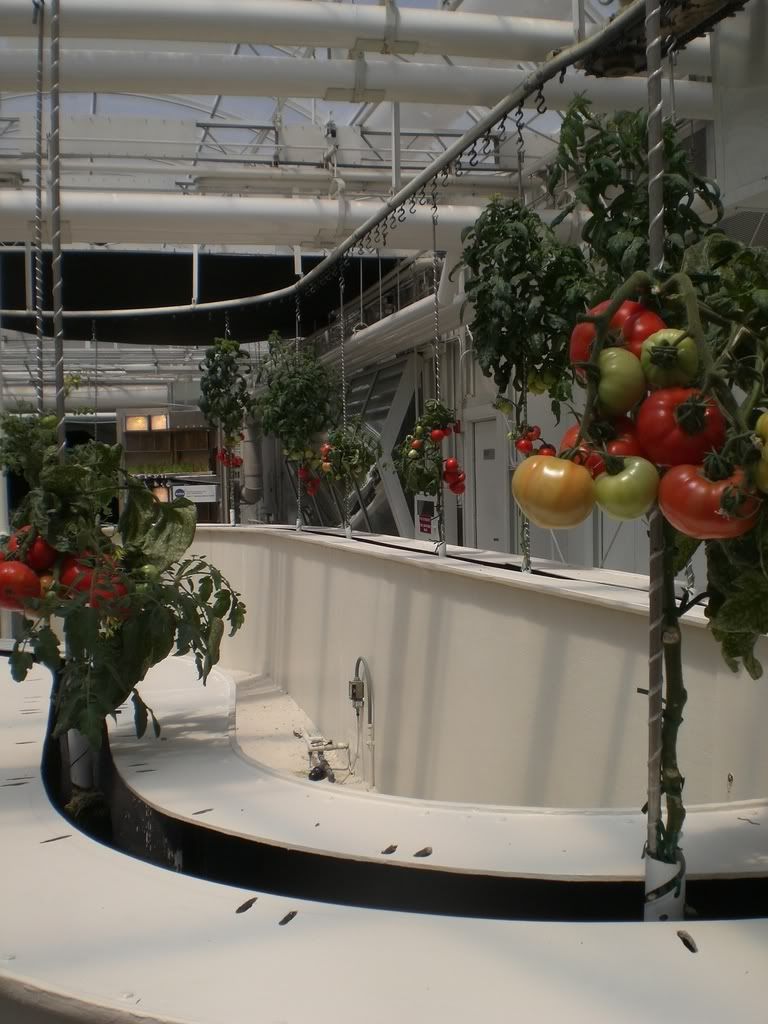
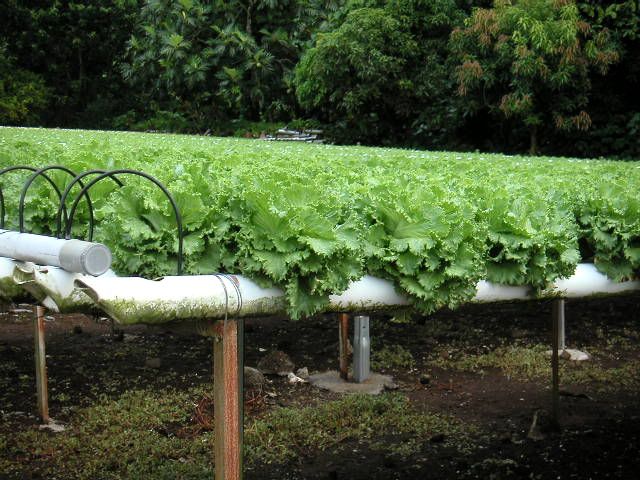
The two main types of hydroponics are solution culture and medium culture. Solution culture does not use a solid medium for the roots, just the nutrient solution. The three main types of solution culture are static solution culture, continuous flow solution culture, & aeroponics. The medium culture method has a solid medium for the roots and is named for the type of medium, e.g. sand culture, gravel culture or rockwool culture. There are two main variations for each medium, subirrigation and top irrigation. For all techniques, most hydroponic reservoirs are now built of plastic but other materials have been used including concrete, glass, metal, vegetable solids and wood. The containers should exclude light to prevent algae growth in the nutrient solution.
  1. Passive subirrigation/Fertigation -The medium generally has airy spaces for air circulation & allowing a oxygen to the roots and capillary action delivers water + nutrient solutions to the roots from the medium based. The simple model of this method normally has the container constantly sit in a shallow layer of nutrient solution or on a capillary mat saturated with nutrient solution. A variety of materials can be used for the medium: vermiculite, perlite, clay granules, rockwool, peat-moss, coco-peat or gravel. This method requires little maintenance and thus, the operational cost is quite low. It only requires only occasional refilling and replacement of the nutrient solution.
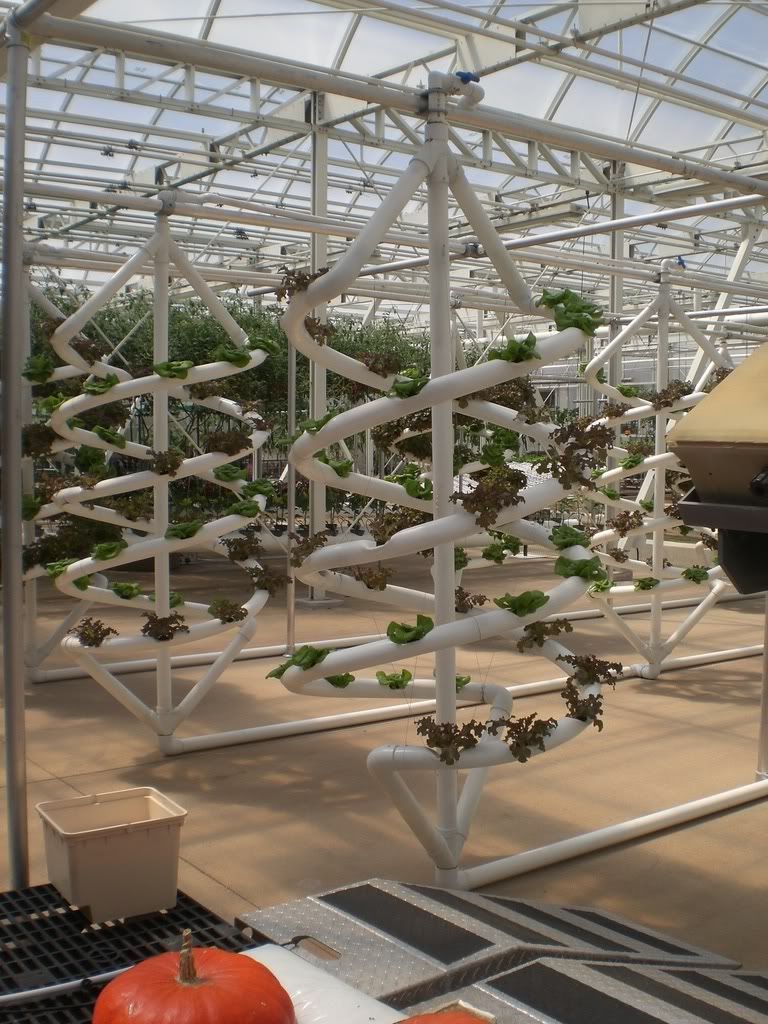
  2. Aeroponics is defined as a system where roots are continuously or discontinuously in an environment saturated with tiny nutrient drops (a mist or aerosol form). This method requires no substrate and entails growing plants with their roots suspended in a deep air or growth chamber with the roots periodically sprayed with a fine mist of oxygen rich, atomized nutrients. Excellent aeration and nutrient absorbtions is the main advantage of aeroponics.
  3. Deep Water Culture - The hydroponic method of plant production by means of suspending the plant roots in a solution of nutrient rich, oxygenated water. This methods favor the use of plastic buckets and large containers with the plant contained in a net pot suspended from the centre of the lid and the roots suspended in the nutrient solution.
  4. Organoponics is a hydroponic system converted to organic cultivation by replacing the inorganic fertilizer with organic compost. In a hydroponic system the roots need to be able to absorb nutrients as they touch the roots' capilaries. There is no soil for organic fertilizer to sit in and release nutrients.
Auto feeding hydroponics systemHydroponics system #2
Hydroponics system #1

Models on many types of soilles culture or Hydroponic


Digg Technorati del.icio.us Stumbleupon Reddit Blinklist Furl Spurl Yahoo Simpy

Wednesday, April 30, 2008

Understanding The Concept Of Fertigation


Fertigation is the simultaneous application of plant nutrients (soluble fertilizers) and water through an irrigation system (drip, trickle, sprinkler, furrow, or flood). Most plant nutrients can be applied through an irrigation system. Currently, nitrogen is the nutrient most commonly used in fertigation. In good practice, soil fertility analysis is used to determine which of the more stable nutrients to apply preplant instead of through the irrigation system. Then fertigation is used to “spoon feed” additional nutrients or to correct nutrient deficiencies detected with plant tissue analysis.

Use of fertigation is increasing in U.S, Europe and Asian countries as producers strive to be more efficient with production inputs and practice good environmental stewardship. It is usually practiced with high value crops such as vegetables (strawberries, tomatoes, cucumbers, melons, etc.), turf, fruit trees, vines, and ornamentals. The main advantage of fertigation is the application of nutrients at the precise time they are needed and at the rate they are utilized. Yields are optimized and fertilizer costs are reduced because the nutrients are applied when, where, and in the soluble form needed.

Overall, fertigation conserves water and nutrients. Factors to consider with fertigation are • water quality (especially in drip/ trickle systems), • soil type/leaching potential, • daily plant nutrient consumption, • potential nutrient precipitation and volatilization, and • appropriate nutrient materials. Fertigation systems have been developed for many crops to provide nutrient management guidelines. In addition, plant, soil, and water analyses provide information to optimize the whole program.


Digg Technorati del.icio.us Stumbleupon Reddit Blinklist Furl Spurl Yahoo Simpy

Monday, April 28, 2008

The Benefits Of Fertigation


Fertigation is the application of fertilizers, soil amendments, or other water soluble products through an irrigation system. Chemigation, a related and sometimes interchangeable term, is the application of chemicals through an irrigation system. Chemigation is considered to be a more restrictive and controlled process due to the potential nature of the products being delivered (pesticides, herbicides, fungicides, etc.) to cause harm to humans, animals or the environment. Therefore chemigation is generally more regulated than fertigation.

Fertigation is used extensively in commercial agriculture and horticulture and is starting to be used in general landscape applications as dispenser units become more reliable and easy to use.

Benefits of fertigation over traditional broadcast or drop fertilizing methods include:

  • Increased nutrient absorption by plants
  • Reduction in fertilizer and chemicals needed
  • Reduced leaching to the water table
  • Reduction in water usage due to the plant's resulting increased root mass being able to trap and hold water
  • Cost Savings - Usually when factors such as labor, fuel, and interrupted play are factored into traditional fertilizer applications, significant cost savings can be seen from use of
    fertigation techniques. Additionally, using fertigation, you can usually get the
    same results from using inexpensive liquids as you can from expensive time release
    granular fertilizers
  • Consistent Nutrient Levels - Feeding low levels of nutrition continuously as opposed to intermittent applications provides improved turf consistency.
  • Reduced Labor - Fertigation reduces the amount of labor required to apply granular fertilizers or sprayed out foliars.
  • Low operational costs


Digg Technorati del.icio.us Stumbleupon Reddit Blinklist Furl Spurl Yahoo Simpy

Sunday, April 27, 2008

Fertigation Farming In Malaysia


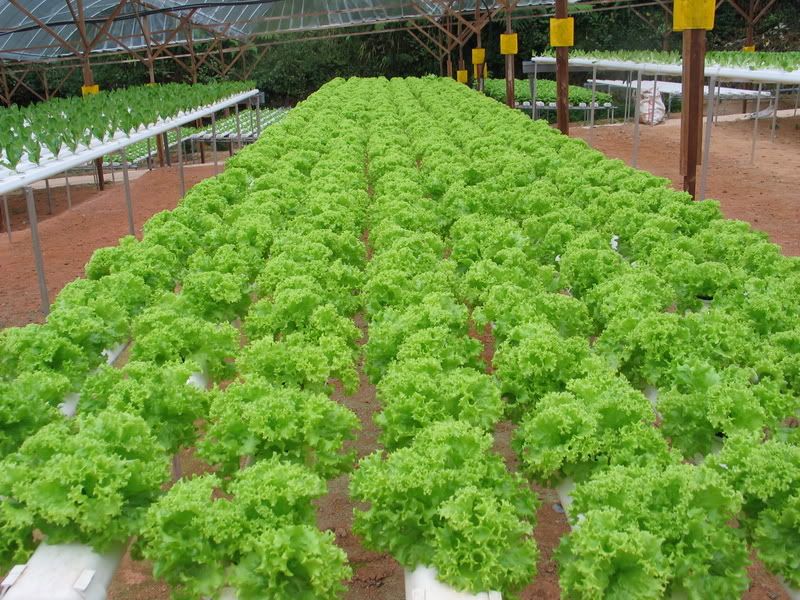
Fertigation technique has gain great popularity in the Malaysian agriculture. Places like Cameron Highlands, Johor, Selangor, Perak and Pahang is saturated with farmers who used this technique. Most of the crops that is planted among others are melons, strawberries (mostly in Cameron Highland), capsicum, tomatoes, chillies, etc. New and modern approach is also added in the fertigation system in order to get the highest return. Some of them are the 'Autopot fertigation system' which is now used mainly in Sweet Melon fertigation plantation. This technique are very different from all other hydroponic systems such as NFT and drip to waste where the accurate dose of nutrients can be achieved. Delivering accurate nutrients to the plants without the salt build up problems many hydroponics experts expect. There is no run-off and no flushing is needed. The yields are good and the flavour of the melons is consistently outstanding. The sweetness measures an average brix reading of 14. The fruit are uniform and free from blemishes. The Autopot System is becoming very popular now in Malaysia even though the set up cost is quite huge. This shows that more and more Malaysians have a good faith in this technique. As a proof, we can see so many greenhouse structures in many parts of Malaysia now, even alongside the North-South highways. Malaysian goverment are also very supportive in this area. The good example are the Department Of Agriculture of Malaysia and Malaysia Agriculture, Research and Developement Institute or MARDI. They provide free training and courses for those who interested in venturing into this field. Some of the courses are as such:


i) Agriculture Certificate

To produce skilled personnel in agriculture at operational level to fulfill the need for the government and the private sectors.
To develop and produce for future agriculture entrepreneurs.


ii) Agriculture Incubator Training

To provide skilled training and exposure to commercial farming operation to entrepreneurs and young farmers for 8 months.


iii) Entrepreneur Development Center

To provide hands-on training on commercial food production methods that meets the Good Manufacturing Standards (GMP) and the Good Agriculture Practices (GAP) for 6 months


Digg Technorati del.icio.us Stumbleupon Reddit Blinklist Furl Spurl Yahoo Simpy

Weather Monitoring


Blogger Templates. Sponsored by SEO Expert

Previews & Insights On New Products, Cool Gadgets & Latest Inventions Previews & Insights On New Products, Cool Gadgets & Latest Inventions Previews & Insights On New Products, Cool Gadgets & Latest Inventions Previews & Insights On New Products, Cool Gadgets & Latest Inventions Previews & Insights On New Products, Cool Gadgets & Latest Inventions Previews & Insights On New Products, Cool Gadgets & Latest Inventions